
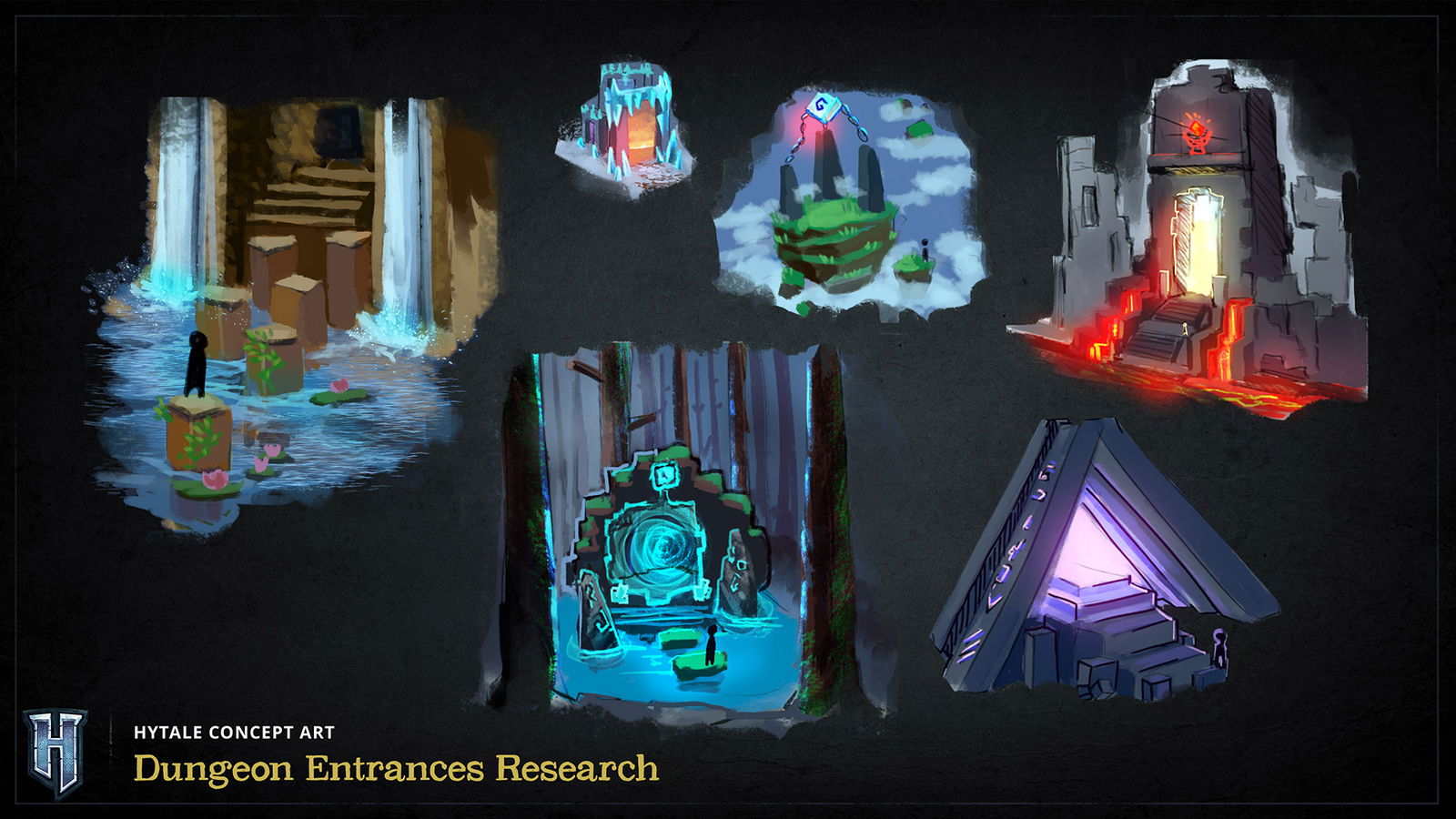
Hytale’s dungeons are a major pillar of its exploration-adventure gameplay. They offer intense experiences, blending combat, puzzles, narrative atmosphere, and unique environments. Thanks to their variety (procedural, crafting, portals, caves), each session promises a deeply immersive adventure.
A dungeon is an enclosed area consisting of several rooms connected by passageways. Each dungeon is designed to offer:
- Structured exploration
- Diverse encounters and narrative battles
- Dynamic Puzzles and Traps
- High-value rewards
- A final room presenting a major challenge
They are designed as “mini-adventures” integrated into the world, each with its own atmosphere and mechanics.
Typical dungeon structure
Although they vary greatly, common patterns can be observed:
- Entrance:
Visible, hidden, protected or scripted. - Intermediate chambers:
Enemy + traps + environmental elements. - Modular mini-boss encounters
, combat phases, puzzle rooms. - Final room:
Boss or main challenge. - Rewards:
Rare loot, artifacts, materials.
The different types of dungeons in Hytale
Hytale offers several categories of dungeons, each with its own rules, generation methods, and objectives.
| Dungeon type | Description | Special Features |
|---|---|---|
| Procedural dungeons | Automatically generated zones, a mix of terrain and prefabs | High replayability, varied environments (e.g., snowy caves, skeletal defenders), natural integration |
| Portal dungeons (prefab) | Hand-created zones linked to dimensional portals | Strict rules, scripted fights, multiple entry points, unique loot |
Procedural dungeons (automatically generated)
Procedural dungeons are distinguished by their infinite replayability .
They use a mix of:
- of naturally generated terrain (caves, chambers, tunnels),
- and prefabs of encounters (pre-designed modules: rooms, traps, enemies).
This method:
- generates unique environments with each exploration .
- offers an immersive experience thanks to its natural integration into the terrain.
- offers a progressive level of difficulty.
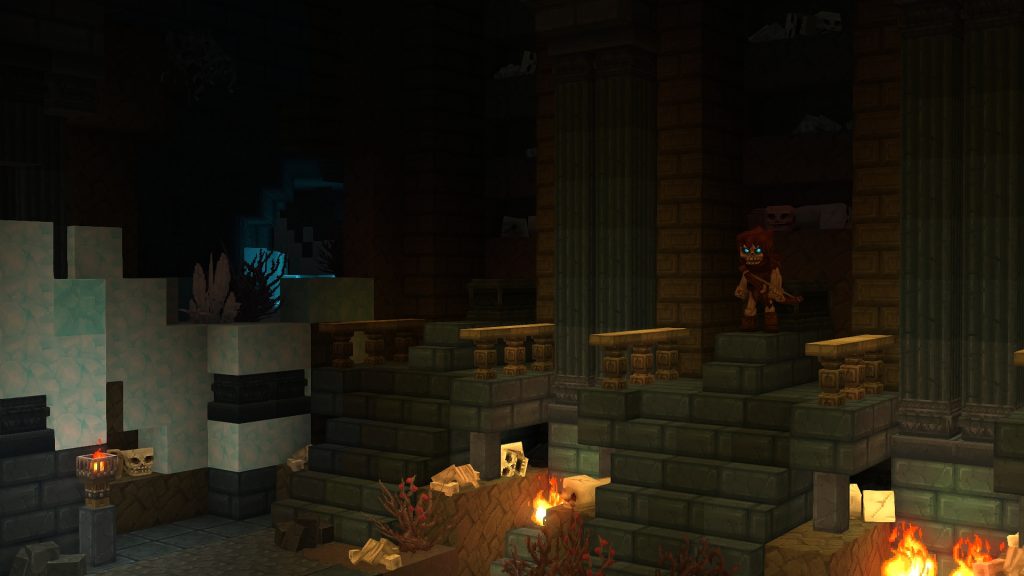
Example: In the snowy Zone 3, the dungeons combine:
- rocky and icy caves,
- modular rooms,
- thematic enemies such as skeletal defenders .
Portal dungeons (hand-crafted / prefab)
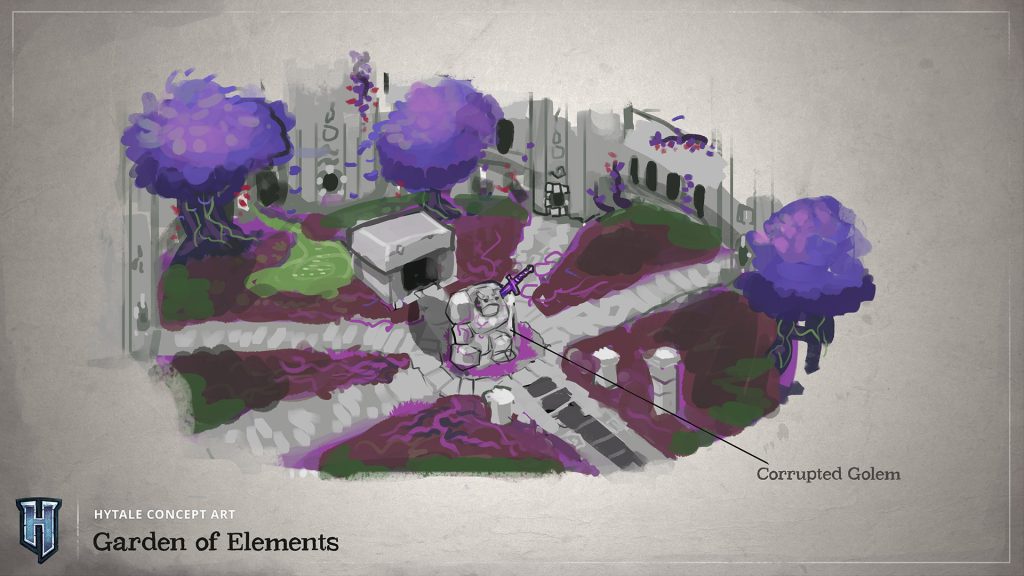
Portal dungeons are much more controlled dungeons, built manually by developers, with specific objectives and rules.
Blocking restrictions
Players cannot freely destroy blocks, which makes combat and puzzles more technical, limits “cheese strat” strategies, and encourages the use of game mechanics.
Various starters
Depending on their location:
- entrances embedded in ruins,
- mystical portals,
- monumental gates,
- hidden access points.
Caves: Procedural Caves
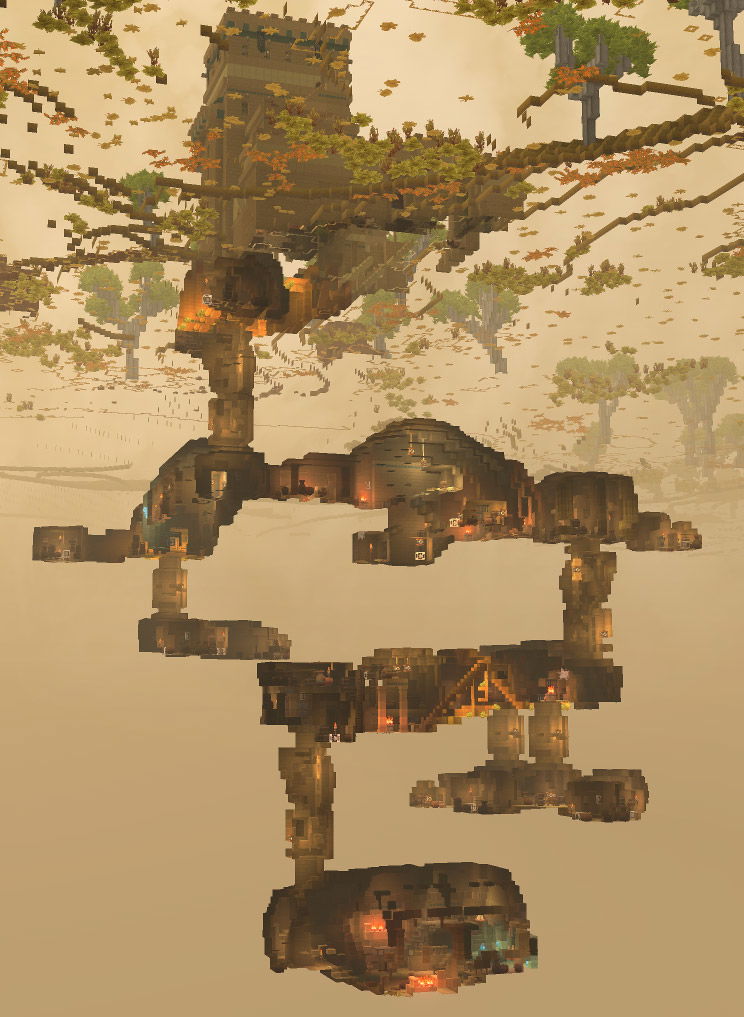
Caves ( caves ) are different from classic dungeons. They are 100% procedural and form the backbone of underground exploration .
Cellar characteristics:
- They depend entirely on the region of the world (snow, jungle, desert…).
- Free, chaotic, natural structure.
- Rich in rare resources (ore, gems, magical materials).
- Filled with creatures, predators, secrets, nests, and mini-events.
- Essential for progression in equipment .
The caves do not follow a “dungeon” logic, but offer gameplay of exploration, survival and harvesting.