
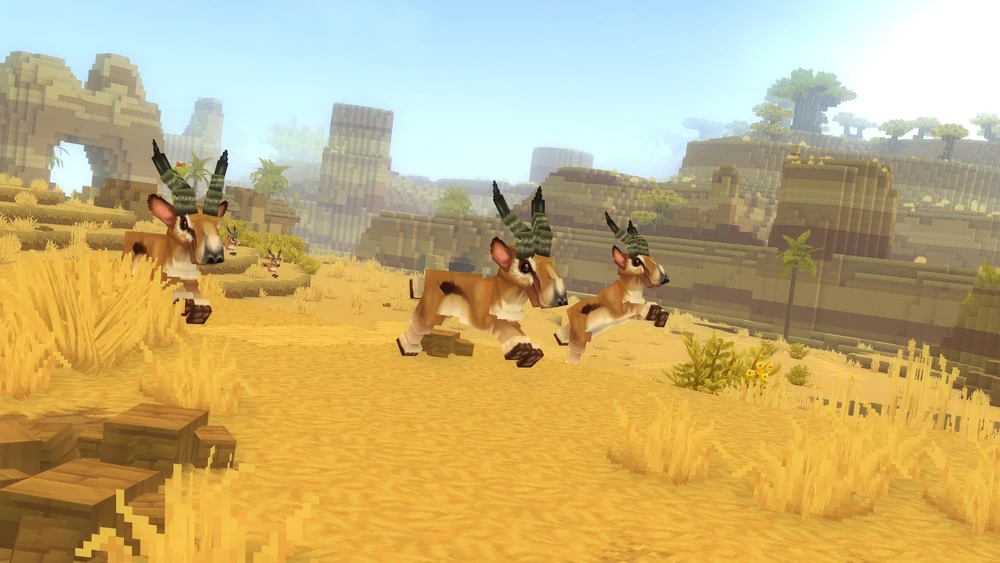
Hytale’s animals are much more than just background creatures; they are pillars of your progression and gameplay experience. Whether it’s harvesting hides to upgrade your gear, luring sheep into a pen for wool, or riding a horse to traverse the world quickly, mastering wildlife interactions is essential.
While features like breeding and permanent domestication are not yet fully implemented, the foundations are laid for deep and rewarding systems. In the meantime, use current feeding, capturing, and hunting mechanics to optimize your resource gathering and exploration. The world of Orbis is vast, and its animal inhabitants are there to help you (or challenge you!) at every step of your adventure.
Understanding Hytale’s Animals
Animals in Hytale are an integral part of the ecosystem, offering opportunities for exploration, survival, and even base building. You will encounter a wide variety of creatures, ranging from passive and skittish wildlife to aggressive beasts and useful mounts.
Currently, most animals are wild by default. Interactions are governed by complex “Utility AI”: creatures react to sound (your heavy armor), sight (vision cones), and the day/night cycle (some sleep and regenerate health). Interactions are primarily based on attraction, movement, and temporary control, rather than permanent domestication. However, the developers have ambitious plans for deeper breeding and taming systems.
Main Resources Obtained from Animals
Hytale’s animals provide a range of essential resources for your progression:
- Meat: Vital food source for exploration and survival.
- Hides and Leather: Key materials for crafting equipment and upgrades.
- Wool: Obtained from sheep, useful for crafting.
- Manure: Periodically produced by well-fed livestock, this is an indispensable fertilizer for accelerating agriculture.
- Eggs: Laid by chickens, another food source or crafting ingredient.
- Bones and Feathers: Small drops that have various applications.
- Magical Fluids: Such as Mosshorn Milk, which possesses unique transformation properties.
Obtaining Resources: Hides and Leather
Animal hides and treated leather are fundamental ingredients for crafting in Hytale. They are necessary for making sleeping bags, tanning racks, backpacks, and improved tools, weapons, and armor. You will also need them to upgrade your crafting benches. Hides are obtained by hunting animals across Orbis. Their “density” generally corresponds to the size of the animal. Raw hides can be refined into leather using a Tanning Rack.
Light Hide and Leather
Light hide and leather are used for many early-game upgrades, including iron tools, weapons, and armor.
| Animal | Main Drop | Main Biome(s) | Danger | Notes |
| Rabbit | Light Hide, Meat, Bone | Emerald Grove | Low | Ideal targets, mind your noise (stealth required). |
| Chicken | Light Hide, Eggs, Meat | Emerald Grove | Low | Easy to find and hunt. |
| Deer | Light Hide | Emerald Grove | Low | Passive animals, reliable source. |
| Sheep | Light Hide, Wool, Meat | Emerald Grove | Low | Useful for wool and hide. |
| Cow | Light Hide, Leather, Beef | Emerald Grove | Low | Provides leather, food, and Manure. |
| Fox | Light Hide | Emerald Grove | Low | Updated (Update 1): Now “Cautious”, will flee from the player. |
| Horse | Light Hide | Emerald Grove | Low | Can also be a temporary mount. |
| Pig | Light Hide, Pork, Meat | Emerald Grove | Low | Good source of meat and hide. |
| Camel | Light Hide | Howling Sands | Low | Fast mount on sand. |
| Boar | Light Hide | Emerald Grove | Medium | Territorial: will charge if you stay too close. |
| Rat | Light Hide | Caves (Everywhere) | Medium | Secondary source during cave exploration. |
Important: Only adult versions of these animals drop hides. Baby animals never drop light hide.
Best Hunting Spots:
- Forest edges near the start point: These areas offer high numbers of rabbits and chickens.
- Open Plains Biomes: Home to many chickens and boars.
- Cave Systems: Rats are found in caves, ideal for incidental collection while mining.
Medium Hide and Leather
Medium hide and leather are used in crafting Thorium and Cobalt tools, armor, and weapons.
| Animal | Main Drop | Main Biome(s) | Danger | Notes |
| Wolf | Medium Hide | Various | Medium | Hunts in packs with flanking AI. |
| Tiger | Medium Hide | Various | Medium | Aggressive animals. |
| Leopard | Medium Hide | Various | Medium | Aggressive animals. |
| Sand Lizard | Medium Hide | Howling Sands | Medium | Excellent source in deserts. |
| Hyena | Medium Hide | Howling Sands | Medium | Scavenger, attacks in groups. |
| Saber-tooth | Medium Hide | Howling Sands | Medium | Very fast sprint, difficult to outrun. |
| Cactee | Medium Hide, Wood | Howling Sands | Medium | Trap: Looks like a cactus. Only moves when you aren’t looking. |
| Rhino Toad | Medium Hide | Devastated Lands | High | Can be dangerous, valuable loot. |
| Cave Raptor | Medium Hide, Meat | Zone 4 (Underground) | High | Pack hunter, very aggressive. |
Best Hunting Spots:
- Howling Sands Biome: Highly recommended, but keep an eye out for suspicious “cacti” (Cactees).
- Zone 4 Volcanic Caves: Raptors are an abundant but dangerous source.
Heavy Hide and Leather
Heavy hide and leather are used for Adamantite gear and the final upgrade of your base workbench.
| Animal | Main Drop | Main Biome(s) | Danger | Notes |
| Grizzly Bear | Heavy Hide | Emerald Grove | High | Sleeps to heal. Very territorial. |
| Mosshorn | Heavy Hide | Emerald Grove | Medium | Magical: Drinking its milk temporarily transforms you into a Mosshorn. |
| Ram | Heavy Hide | Borea (Zone 3) | Medium | Possesses a knockback attack. |
| Crocodile | Heavy Hide | Howling Sands | High | Spawns during Ancient Gateway events. |
| Polar Bear | Heavy Hide | Borea (Zone 3) | High | Semi-aquatic, be careful on the ice. |
| Emberwulf | Heavy Hide | Devastated Lands | High | Dangerous endgame creatures. |
| Cave Rex | Heavy Hide, Meat | Zone 4 (Underground) | Very High | The ultimate challenge (Zone Boss), massive loot. |
| Triceratops | Heavy Hide, Meat | Zone 4 (Underground) | High | Defensive but powerful if provoked. |
Best Hunting Spots:
- Emerald Grove: Mosshorns are the safest source (passive).
- Borea (Zone 3): Rams and Polar Bears are frequent on slopes and ice.
Storm Hide and Leather
This type of hide is used for the final backpack upgrade and crafting Mithril tools. Availability: Storm hide does not appear to drop naturally from creatures in the current version (v1.0).
Animal Interactions: Current Mechanics
Current interaction mechanics focus on survival, temporary management, and agriculture.
Feeding and Luring (The Manure Economy)
Feeding animals does not permanently tame them, but offers temporary control and kickstarts agricultural resource production.
- Attraction: Lures animals to you or a specific location.
- Manure Production: A well-fed animal will produce Manure. This is the only way to obtain effective fertilizer for your crops.
- Visual Effects: Triggers hearts, indicating the animal is satiated (ready to produce manure).
How to do it:
- Hold the right food: Wheat (Cows/Sheep), Carrots (Pigs/Horses/Rabbits).
- Use Feed Bags: Place them on the ground to create an automatic gathering point.
- Guide animals into pens: Essential for concentrating manure production in one place.
Capturing and Moving Animals
Capture Crates allow players to pick up and transport small animals.
- Affected Animals: Rabbits, chicks, piglets, and small passive creatures.
- Note: Large adult animals do not fit in crates.
Horse Riding and Other Mounts
Mounts have stats adapted to their respective biomes. They are not “owned” by the player and may wander off if left alone.
- Horse: Versatile, medium speed. Ideal for plains (Zone 1).
- Camel: Faster on sand, suffers no movement penalty in the desert (Zone 2).
- Ram: Capable of climbing steep slopes more easily than other mounts (Zone 3).
Future Breeding and Domestication
Currently, animal breeding (reproduction with babies) is technically present in the code but disabled or very limited in v1.0. The Memories system at the Forgotten Temple suggests the future unlocking of “Beastmaster” skills.
Bestiary Summary
Basic and Passive Animals
These animals are the foundation of the agricultural economy and early game.
| Animal | Main Drop | Hide Type | Biome | Notes |
| Chicken | Eggs, Meat | Light Hide | Zone 1 | – |
| Cow | Leather, Beef, Manure | Light Hide | Zone 1 | Agriculture engine. |
| Pig | Pork, Meat, Manure | Light Hide | Zone 1 | – |
| Rabbit | Meat, Bone | Light Hide | Zone 1 | Detects footsteps. |
| Deer | Meat | Light Hide | Zone 1 | – |
| Sheep | Wool, Meat | Light Hide | Zone 1 | – |
| Horse | Meat | Light Hide | Zone 1 | Standard mount. |
| Camel | Meat | Light Hide | Zone 2 | Sand mount. |
| Ram | Meat | Heavy Hide | Zone 3 | Mountain mount. |
Predators and Aggressive Beasts
| Animal | Main Drop | Hide Type | Biome | Notes |
| Fox | Meat | Light Hide | Zone 1 | “Cautious” behavior. |
| Boar | Meat | Light Hide | Zone 1 | Territorial. |
| Wolf | Meat | Medium Hide | Various | Group hunter. |
| Cactee | Wood, Meat | Medium Hide | Zone 2 | Mimicry (Cactus). |
| Hyena | Meat | Medium Hide | Zone 2 | Group scavenger. |
| Saber-tooth | Meat | Medium Hide | Zone 2 | Fast predator. |
| Grizzly Bear | Meat | Heavy Hide | Zone 1 | Heals by sleeping. |
| Mosshorn | Meat | Heavy Hide | Zone 1 | Transformation Milk. |
| Polar Bear | Meat | Heavy Hide | Zone 3 | Swimmer. |
Zone 4 Dinosaurs (Devastated Lands – Underground)
| Dinosaur | Health Points | Behavior | Main Drop | Hide Type |
| Raptor | 100 HP | Aggressive (Pack) | Wild Meat | Medium Hide |
| Cave Rex | 400 HP | Very Aggressive | Wild Meat | Heavy Hide |
| Triceratops | 250 HP | Defensive | Wild Meat | Heavy Hide |
| Archaeopteryx | 16 HP | Passive | Feathers, Meat | N/A |